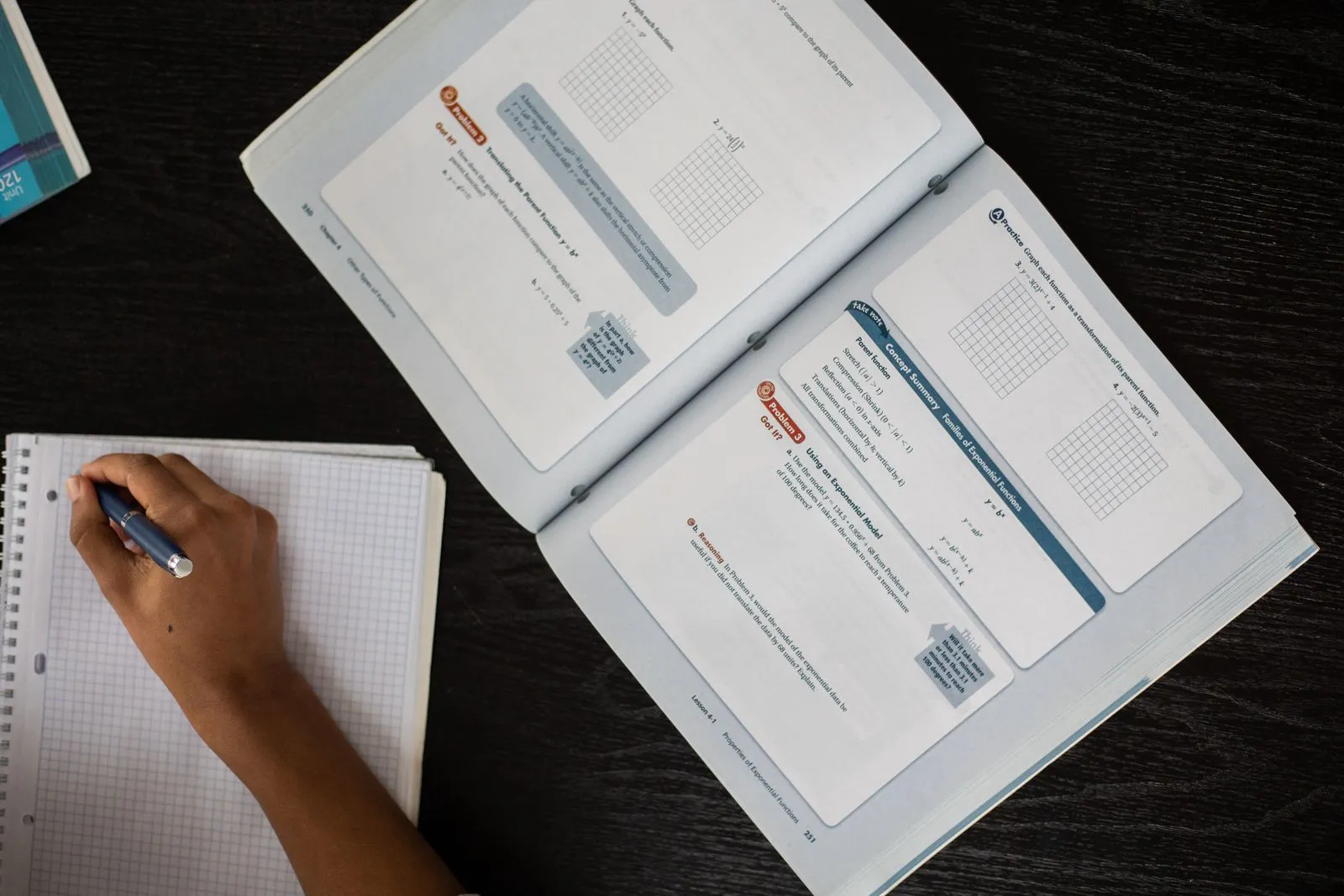
Algebra becomes more manageable when studying is a routine rather than a last-minute effort. Short, focused sessions help you remember rules, recognize problem types, and work through steps with care. The goal is not to complete as many problems as possible; it is to understand why each step works and notice where confusion begins. Use the habits below to organize review, get more from practice, and catch errors before they cost points on a test.
Review Ideas Before Rules
Start each study session by naming the concept you are reviewing, such as solving two-step equations or simplifying expressions. In your own words, explain what the task asks you to do and why the main rule applies. Then look at one worked example and cover the solution. Try to recreate its steps from memory before checking your work.
Keep a small list of concepts that still feel uncertain. For each one, write a brief explanation, one example, and a question you want answered. This turns vague frustration into a specific next step. If you cannot explain a rule or decide when to use it, revisit class notes or ask for help before moving on to harder problems.
Practice With a Purpose
Choose a manageable set of problems and work without looking at solutions first. Begin with a few examples of one skill, then mix in problems from earlier lessons. The first set builds confidence; the mixed set helps you identify which method fits each question. Write every meaningful step, especially when distributing, combining like terms, or moving terms across an equation.
After checking your answers, sort missed problems by cause: misunderstood concept, incorrect setup, arithmetic slip, or skipped step. Redo each missed problem from a blank page rather than copying the correction. If the same error appears again, choose a simpler example and explain each step aloud or in writing before returning to the original problem.
Make Error Checks Routine
Build a quick check into every solution. For an equation, substitute your answer into the original equation and see whether both sides match. For expressions, review signs and confirm that like terms are the only terms combined. For word problems, check whether your answer includes the requested quantity and makes sense in the situation.
Use a consistent final scan before moving on: reread the question, check copied numbers and signs, and verify that each operation was applied correctly. Keep an error log with the original mistake and the check that would have caught it. Review this log before quizzes so your most common trouble spots stay visible.
Prepare Gradually for Tests
Spread review across several short sessions instead of saving it all for the night before a test. A simple plan might include revisiting notes, practicing a few problems, and correcting earlier mistakes on separate days. At the end of each session, write down what you can now do and what still needs attention. That record makes the next session easier to begin.
Before test day, try a small mixed set without notes and give yourself enough time to show complete work. Check each answer using the appropriate method, then spend the remaining review time on patterns in your errors—not on repeating problems you already solve reliably. If a concept remains unclear, bring a specific example and question to a teacher or tutor.
Reliable algebra progress comes from clear explanations, deliberate practice, and regular error checks. Start with one habit, such as writing complete steps or keeping an error log, and use it consistently before adding another. For individualized support, Miami Math Atelier can help students strengthen their algebra routines and work through challenging concepts.